Accelerating Fulfillment and Eliminating Errors: The Strategic Edge of Modern Warehouse Management Systems
With ecommerce evolving at breakneck speed, global supply chains tightening, and consumer expectations rising by the day, fulfillment operations face unprecedented complexity. In this environment, outdated systems are no longer enough. Legacy warehouse management systems (WMS) lack the agility and intelligence required to meet the modern demands of high-volume, multi-channel fulfillment.
Enter the modern Warehouse and Fulfillment Management System — an advanced, AI-powered solution designed to accelerate order processing and improve accuracy at scale. Platforms like 3PLNext are redefining fulfillment by enabling automation, omnichannel visibility, and data-driven decision-making, helping 3PLs and suppliers elevate performance while remaining competitive.
This article explores how traditional WMS platforms fall short in today’s fulfillment environment — and how advanced systems like 3PLNext help businesses increase speed, reduce errors, and scale seamlessly.
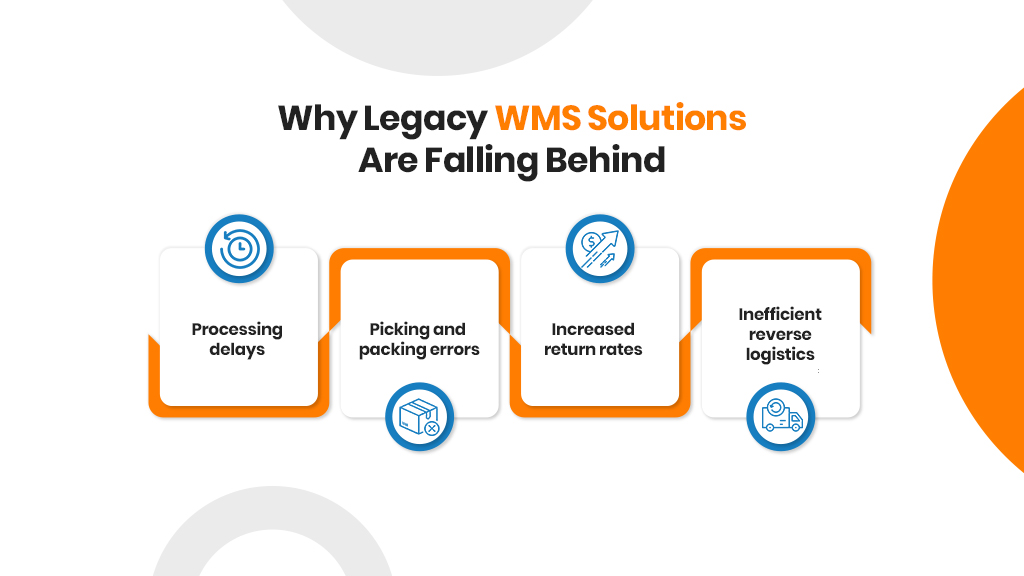
Why Legacy WMS Solutions Are Falling Behind
The supply chain has transformed dramatically — and continues to do so. Rising customer expectations, fragmented sales channels, and global disruptions have exposed major gaps in conventional WMS platforms.
Here’s how outdated systems can hamper performance:
The Price of Slow and Inaccurate Fulfillment
The “Amazon effect” has conditioned consumers to expect rapid, error-free delivery. According to McKinsey, purchase likelihood drops by 60% if a product’s delivery exceeds three days. Although affordability is a factor, speed and reliability remain critical.
Unfortunately, legacy WMS platforms often struggle with high order volumes and complex DTC workflows, resulting in:
- Processing delays
- Picking and packing errors
- Increased return rates
- Inefficient reverse logistics
- Damaged brand perception
When “Good Enough” Isn’t Enough
Older systems were built for bulk B2B shipments — not for today’s fast-moving, individualized DTC orders. With limited automation and rigid workflows, these platforms rely heavily on manual processes that increase the risk of errors.
In today’s competitive landscape, “close enough” fulfillment is no longer acceptable. It leads to dissatisfied customers, missed SLAs, and lost revenue opportunities.
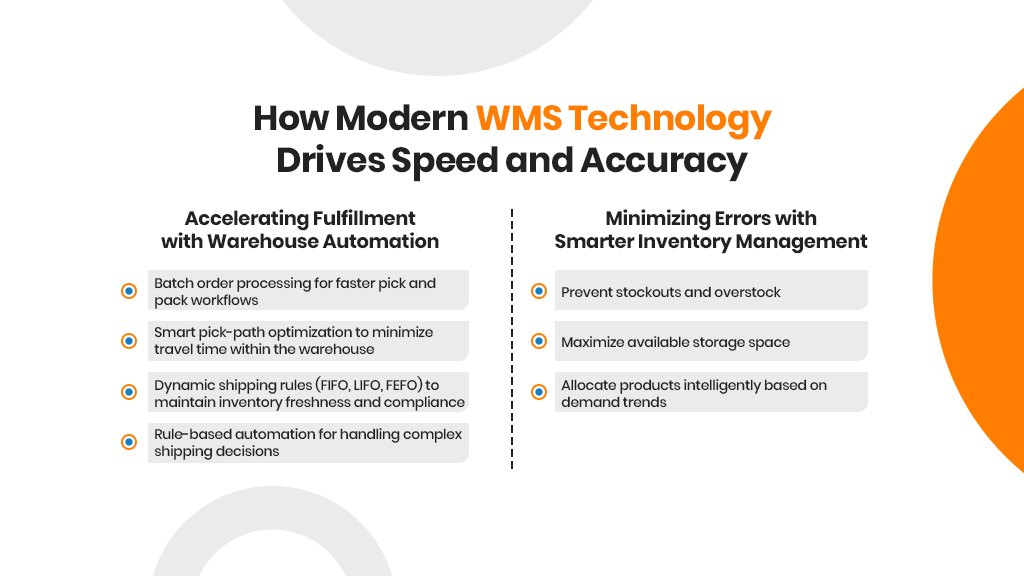
How Modern WMS Technology Drives Speed and Accuracy
The next generation of warehouse management systems goes far beyond basic inventory tracking. Advanced WMS platforms like 3PLNext leverage AI and automation to deliver meaningful improvements across every stage of the fulfillment process.
Accelerating Fulfillment with Warehouse Automation
AI-driven WMS platforms help employees work more efficiently by automating repetitive and time-sensitive tasks. Key functionalities include:
- Batch order processing for faster pick and pack workflows
- Smart pick-path optimization to minimize travel time within the warehouse
- Dynamic shipping rules (FIFO, LIFO, FEFO) to maintain inventory freshness and compliance
- Rule-based automation for handling complex shipping decisions
These enhancements reduce order cycle times, lower labor costs, and boost overall productivity without compromising accuracy.
Minimizing Errors with Smarter Inventory Management
Modern WMS synchronize inventory data across all channels in real time. With AI-powered forecasting and predictive analytics, 3PLs and suppliers can:
- Prevent stockouts and overstock
- Maximize available storage space
- Allocate products intelligently based on demand trends
User-friendly interfaces and intuitive workflows further reduce human error and simplify employee training, allowing teams to scale quickly without compromising performance.
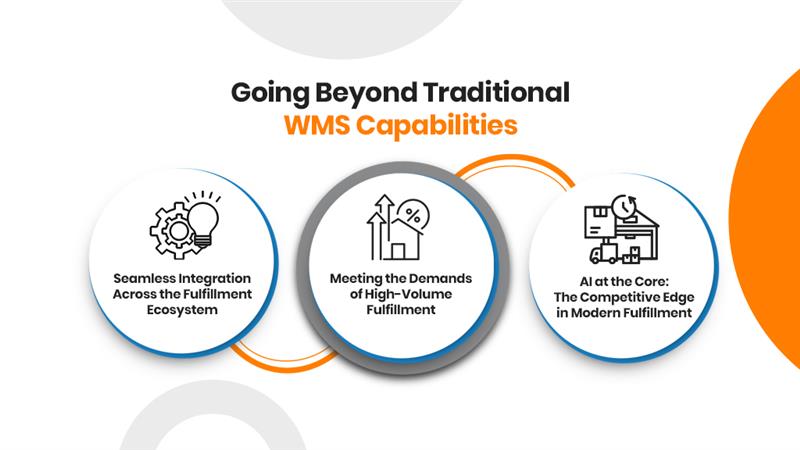
Going Beyond Traditional WMS Capabilities
While traditional WMS platforms handle internal warehouse processes, today’s fulfillment challenges demand end-to-end visibility and control. That’s where modern Warehouse and Fulfillment Management Systems like 3PLNext shine.
Seamless Integration Across the Fulfillment Ecosystem
Built with headless architecture, 3PLNext integrates effortlessly with key components of the fulfillment stack, including:
- ERP systems
- Order management systems (OMS)
- CRM platforms
- Transportation management systems (TMS)
- Ecommerce marketplaces and web stores
- Billing and shipping tools
This ecosystem-wide interoperability eliminates silos, improves coordination, and provides real-time visibility into every order, every channel, and every customer.
Meeting the Demands of High-Volume Fulfillment
For 3PLs and brands managing both B2B and DTC operations, speed and precision are critical. 3PLNext delivers intelligent, data-driven workflows that help businesses:
- Optimize order routing
- Reduce delays in fast-moving inventory
- Enhance delivery precision across geographies and fulfillment centers
AI at the Core: The Competitive Edge in Modern Fulfillment
Where legacy systems offer basic suggestions, 3PLNext incorporates artificial intelligence at every level of its WMS platform. With intelligent automation, it enables:
- Dynamic slotting based on real-time and historical inventory data
- Optimized warehouse layouts for high-volume SKUs
- Predictive demand forecasting that improves purchasing and replenishment decisions
These capabilities empower businesses to unlock the full potential of their warehouse space, reduce operational waste, and stay ahead of customer demand.
Ready to Fulfill the Future?
Fulfillment today is a strategic advantage — or a costly liability. Modern supply chains need flexible, scalable systems that evolve with business demands. With 3PLNext, suppliers and logistics providers gain the tools to:
- Automate workflows
- Improve order accuracy
- Unify omnichannel fulfillment
- Accelerate delivery
- Scale with confidence
3PLNext isn’t just a warehouse management system — it’s a growth engine designed for modern commerce. Experience improved accuracy, higher operational efficiency, and a future-ready fulfillment infrastructure tailored to meet the demands of high-volume fulfillment.


Leave a Reply