What Happens When Your Order Fulfillment Software Can’t Scale: A 3PL Provider’s Hidden Risk
In the rapidly evolving ecommerce landscape, fulfillment operations must be as dynamic and adaptable as the customers they serve. For third-party logistics (3PL) providers and direct-to-consumer (DTC) brands, scalability is no longer optional — it’s foundational. A scalable warehouse management system (WMS) allows businesses to efficiently manage growing order volumes, expand across sales channels, and maintain profitability. Without it, fulfillment becomes a bottleneck instead of a growth enabler.
Why Modern Fulfillment Demands Scalability
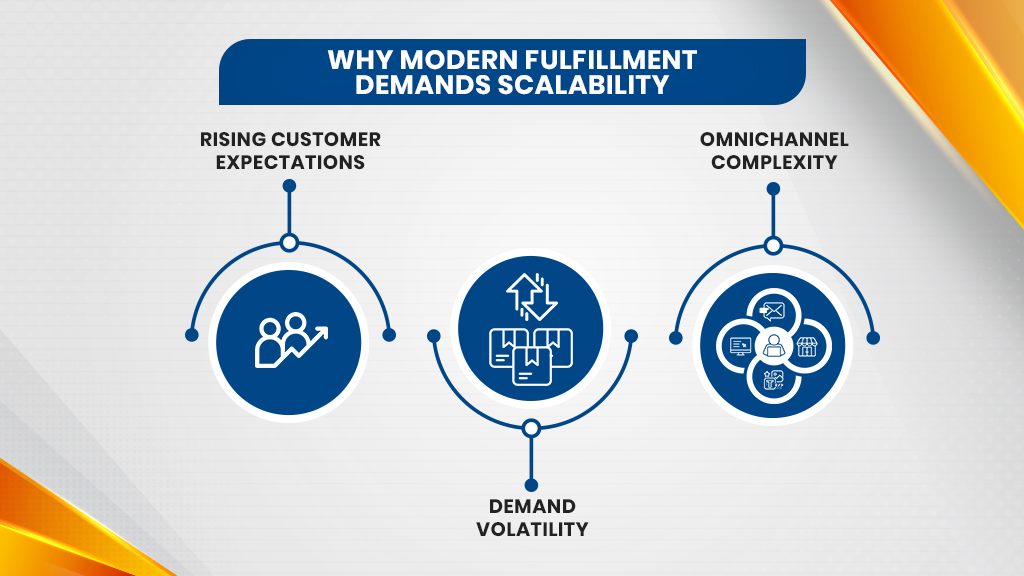
Today’s fulfillment environment is vastly more complex than it was even a few years ago. Consider these major shifts:
- Rising customer expectations: Ecommerce has reshaped buyer behavior. Fast, accurate delivery across multiple channels is now the standard, not a bonus.
- Demand volatility: Seasonal surges, flash sales, and shifting consumer preferences lead to unpredictable inventory movement. Scalable systems equipped with forecasting and predictive analytics can help mitigate the risks of overstock and stockouts while optimizing storage space.
- Omnichannel complexity: Brands that started online are now bridging the gap between digital and physical. This requires seamless coordination between marketplaces, brick-and-mortar locations, and social platforms.
To stay competitive, fulfillment providers must master real-time inventory visibility, accurate order processing, and end-to-end channel integration — all without sacrificing efficiency. Scalability is the key to achieving this level of operational sophistication.
Defining Scalability in 3PL Fulfillment Software
Scalability refers to a system’s ability to support growth without compromising performance or escalating operational costs. In fulfillment, this means being able to accommodate rising order volumes, integrate new technologies, and expand into new markets with minimal disruption.
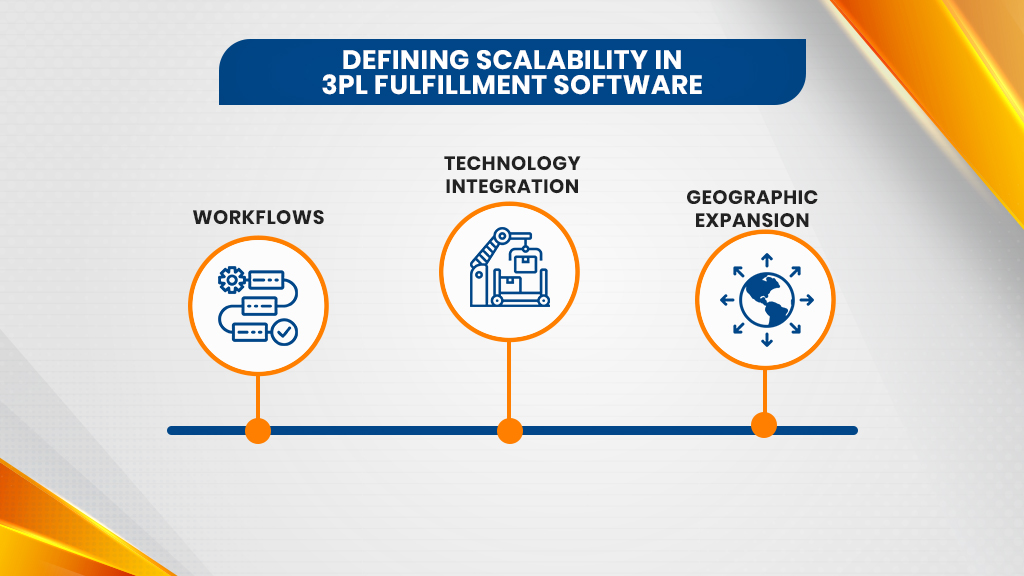
When implemented effectively, a scalable fulfillment management system (FMS) like 3PLNext enhances agility across multiple dimensions:
- Workflows: Streamline more picks, packs, and shipments without overhauling your operations.
- Technology integration: Seamlessly adopt automation tools and connect with new sales channels while preserving existing workflows.
- Geographic expansion: Launch and replicate warehouse operations across locations to bring fulfillment closer to customers and reduce shipping times.
Scalability is not just about capacity — it’s about adaptability. And the right software makes this seamless.
The Cost of Using Non-Scalable Fulfillment Software
While scalable platforms fuel growth, rigid or outdated systems can stifle it. Here’s how:
When Your Technology Becomes a Bottleneck
Legacy WMS platforms often rely on manual processes and lack robust automation capabilities. These systems struggle to keep up with spikes in order volume, especially during peak seasons. This limitation can force providers to decline new business or fail existing customers due to late deliveries and increased fulfillment errors — ultimately damaging brand reputation and growth potential.
Hidden Costs and Reduced Margins
Inflexible systems tend to drive up costs as they fail to scale efficiently. Labor shortages and rising transportation expenses are exacerbated by inefficient workflows. Traditional per-user pricing models further hinder scalability, charging you more as your workforce grows — penalizing your business for expanding.
In contrast, modern wms systems like 3PLNext offer warehouse based competitive pricing, ensuring no variable costs added.
What Makes Order Fulfillment Software Truly Scalable?
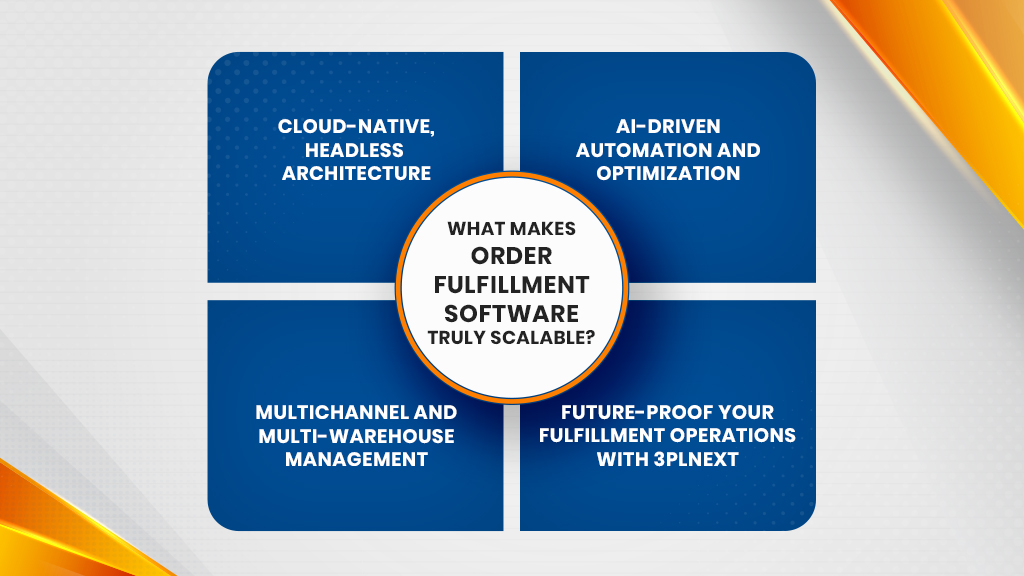
Cloud-Native, Headless Architecture
Modern fulfillment platforms like 3PLNext are built on serverless, cloud-native foundations with headless architecture. This design decouples the backend from the frontend, allowing seamless integration with various CRMs, ERPs, and TMS platforms — without the need for heavy custom development.
This modular approach provides real-time visibility across all channels, improves interoperability, and minimizes disruption as your operations evolve. It’s a future-proof strategy for today’s omnichannel world.
AI-Driven Automation and Optimization
Scalability is supercharged by artificial intelligence. AI-powered features in 3PLNext help optimize nearly every aspect of your warehouse:
- Intelligent order routing: Ensure faster, more accurate delivery by assigning orders to the most optimal warehouse location.
- Smart warehouse layout: Recommend ideal storage placements to enhance picking efficiency and reduce error rates.
- Optimal picking and packing: Whether using wave, batch, or zone picking methods, AI minimizes labor strain and boosts productivity through route optimization.
Beyond the warehouse, AI-enabled forecasting tools help predict demand more accurately, reducing waste and ensuring the right products are available at the right time.
Multichannel and Multi-Warehouse Management
With products being sold across a variety of platforms — from brand websites to Amazon to social commerce — a scalable FMS like 3PLNext offers centralized visibility across every location. This reduces the risk of overselling, improves stock accuracy, and enables smarter, faster decision-making for distributed fulfillment networks.
Future-Proof Your Fulfillment Operations with 3PLNext
In a marketplace defined by speed, complexity, and high expectations, fulfillment is your competitive edge. Choosing scalable fulfillment software doesn’t just improve operational efficiency — it unlocks growth opportunities.
3PLNext is purpose-built for 3PLs, DTCs, and B2B providers seeking to expand without friction. Its headless, cloud-native infrastructure allows seamless integration and quick adaptation to new demands — geographic, technological, or operational.
With 3PLNext, your fulfillment operations won’t just keep up — they’ll lead.
Looking to scale smarter? Request a personalized demo of 3PLNext today and see how we empower fulfillment businesses to grow on their terms.



Leave a Reply