AI Warehouse Management Software: A Smarter Way to Access Warehouse Data and Operational Insights
Warehouse management systems have become increasingly sophisticated over the years. They capture every inventory movement, shipment, customer order, stock adjustment, and warehouse transaction, creating an enormous amount of operational data. Yet for many businesses, having access to data is only part of the equation. The real challenge lies in finding the right information quickly enough to support day-to-day decision-making.
A warehouse manager who wants to identify delayed shipments, a finance team reviewing customer profitability, or an operations director comparing warehouse performance often has to navigate multiple reports, dashboards, and filters before arriving at a meaningful answer. As warehouse operations continue to grow in scale and complexity, this traditional approach to reporting consumes valuable time and often delays critical business decisions.
This is where AI Warehouse Management Software is changing the way businesses interact with their Warehouse Management Systems. Rather than searching through reports, users can simply ask questions in simple language and receive instant answers based on live operational data. AI for Warehouse Management is making business intelligence more accessible, allowing organizations to spend less time gathering information and more time acting on it.
The Challenge Isn’t Data, It’s Accessing the Right Insights
Every warehouse generates thousands of data points throughout the day. Inventory is received and put away, customer orders are processed, shipments leave the warehouse, carriers update delivery statuses, and inventory levels change continuously. Each activity contributes valuable information that can help improve operational efficiency and customer service.
Despite this abundance of information, many businesses still struggle to gain complete visibility across their operations. Reports are often scattered across different modules, dashboards provide only part of the picture, and answering a single business question may require combining information from multiple sources.
For example, understanding why order fulfillment times have increased may require reviewing warehouse activity, inventory availability, and shipment status before the root cause becomes clear.
Without effective Warehouse Data Analytics, operational data becomes difficult to use, limiting the speed and quality of business decisions.
Why Traditional WMS Reporting Has Its Limitations
Warehouse Management Systems have always included reporting capabilities, and these reports remain essential for monitoring operations. However, old school reporting methods were designed around predefined reports and static dashboards rather than dynamic conversations.
When managers need answers that fall outside standard reports, they often rely on exports, spreadsheets, or manual analysis. Even experienced users can spend considerable time applying filters, adjusting date ranges, and combining multiple reports to answer relatively simple questions.
This process creates unnecessary delays in environments where operational decisions need to be made quickly.
Today’s warehouse businesses need more than conventional WMS Reporting Software. They need immediate access to Real-Time Warehouse Data that supports informed decisions throughout the day rather than after reports have been generated.
AI Is Creating a New Way to Interact with Warehouse Data
Artificial intelligence is becoming an increasingly practical tool within warehouse operations, not because it replaces existing systems, but because it makes those systems easier to use.
Instead of learning complex reporting tools or relying on technical teams to generate reports, users can communicate directly with their Warehouse Management System using simple language. Questions that previously required multiple reports can now be answered in seconds.
This approach makes AI valuable for Warehouse Management across every department. Warehouse managers can monitor fulfillment performance, finance teams can analyze profitability, customer service representatives can access shipment information, and business leaders can review operational trends without interrupting daily workflows.
The right use of technology removes barriers between users and the information already stored inside the system.
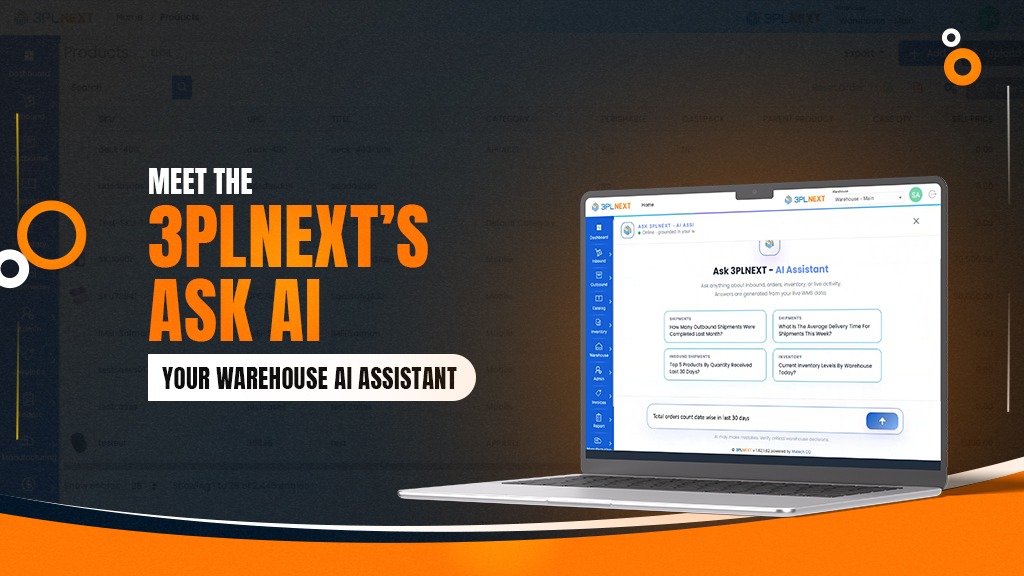
Meet 3PLNext’s Ask AI your Warehouse AI Assistant
The 3PLNext Ask AI has been developed to simplify how businesses access warehouse data. Built directly into the AI-Powered Warehouse Management System, it allows users to retrieve operational insights simply by asking questions.
Instead of searching through dashboards or manually generating reports, users can communicate with the system.
A warehouse manager might ask which warehouse recorded the highest number of late shipments. A finance manager may want to compare revenue across customer segments. An operations team could request the top performing SKUs or analyze average fulfillment times between order creation and shipment.
Your AI Assistant processes these requests using live operational data and delivers accurate responses within seconds, helping teams make decisions based on current business performance rather than outdated reports.
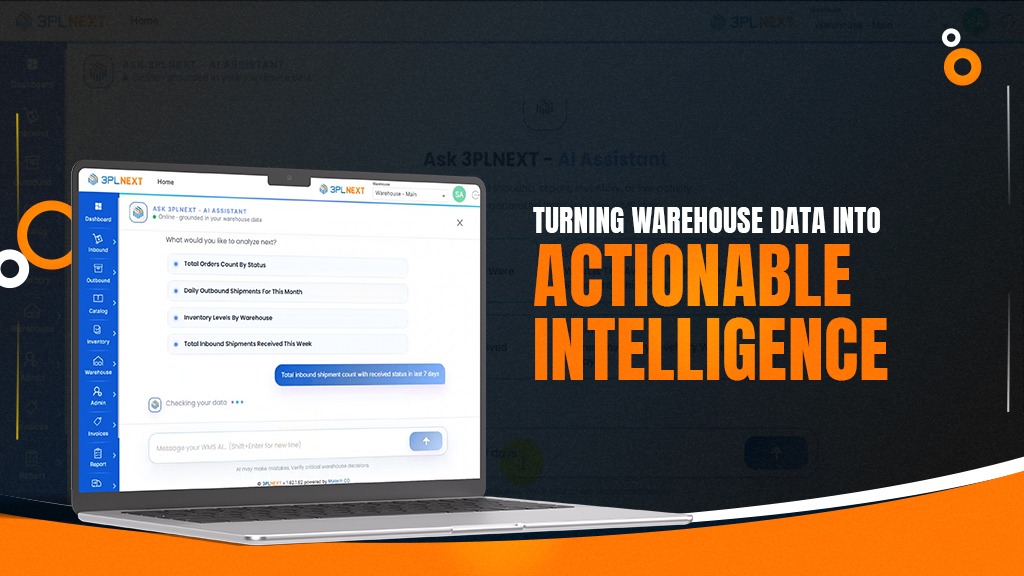
Turning Warehouse Data into Actionable Intelligence
Collecting operational data has never been the difficult part of warehouse management. The real value comes from transforming that information into practical business intelligence.
An effective Warehouse AI Assistant helps businesses understand not only what is happening but also why it is happening. Rather than reviewing dozens of reports individually, users gain a consolidated view of warehouse performance, customer activity, inventory movement, and operational efficiency.
This improves visibility across the entire organization while reducing the time required to locate meaningful information. With better access to Warehouse Operations Analytics, businesses can identify performance trends earlier, respond to operational challenges faster, and make more confident decisions supported by real data.
Better Visibility Leads to Better Decisions
Every operational decision has a direct impact on customer satisfaction, warehouse productivity, and profitability. Whether businesses are managing one warehouse or multiple fulfillment centers, maintaining visibility across operations is essential.
Using Warehouse Management AI, organizations can monitor inventory movement, analyze shipment performance, compare warehouse productivity, and evaluate customer activity from a single interface.
Rather than waiting until the end of the week to review reports, management teams gain immediate visibility into operational performance as business activities occur.
This level of transparency helps organizations respond proactively instead of reactively, reducing delays and improving service levels.
Understanding Profitability Beyond Revenue
Revenue alone rarely tells the complete story.
Two customers may generate similar sales volumes while producing significantly different profit margins due to different warehouse handling requirements, shipping expenses, or storage utilization.
AI-powered analytics make it easier to evaluate these financial relationships.
Warehouse managers can compare revenue across warehouses, understand customer profitability after operational expenses, identify high-value customer segments, and monitor financial performance over time without manually combining operational and financial reports.
Connecting operational activity with financial performance provides a more complete understanding of warehouse profitability and supports better long-term planning.
AI Makes Warehouse Intelligence Accessible to Every Team
Business intelligence has traditionally been associated with analysts and reporting specialists. However, operational insights are valuable across every department.
Warehouse supervisors need visibility into fulfillment activity. Customer service teams require immediate access to shipment information. Finance departments monitor profitability, while senior management evaluates overall operational performance.
The Warehouse AI Assistant removes many of the technical barriers that have traditionally limited access to business intelligence.
Instead of learning reporting structures or navigating complex dashboards, users simply ask questions using their own words.
This makes advanced analytics available to more people throughout the organization while encouraging faster and more informed decision-making.
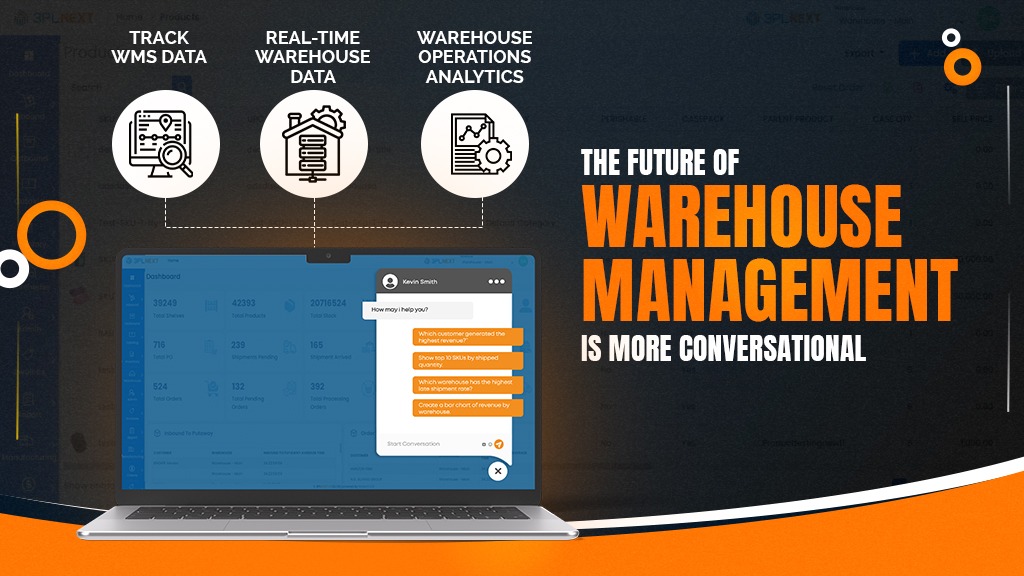
The Future of Warehouse Management Is More Conversational
Warehouse technology continues to evolve, but the objective remains the same: helping warehouse operate more efficiently while providing better service to customers.
As AI becomes more closely integrated with Warehouse Management Systems, the way stakeholders access information is also changing. Rather than searching through reports, users are beginning to interact directly with their systems through conversation.
This shift represents more than a new interface. It changes how quickly businesses can access operational insights, identify issues, and respond to changing business conditions.
Organizations adopting Warehouse Management Software with AI are moving beyond traditional reporting and more towards intelligent, responsive operations supported by real-time data.
Conclusion
Warehouse data has always been one of the most valuable assets within a business. The challenge has never been collecting information it has been turning that information into decisions that improve operational performance.
AI Warehouse Management Software simplifies this process by making warehouse data easier to access, understand, and act upon. Instead of spending valuable time navigating reports, teams can ask questions, receive immediate insights, and focus on improving warehouse performance.
With the 3PLNext AI Assistant, businesses can track WMS data, access Real-Time Warehouse Data, analyze Warehouse Operations Analytics, and gain deeper visibility across inventory, fulfillment, revenue, and customer performance all from a single intelligent interface.
As warehouse operations continue to become more connected and data-driven, AI will play an increasingly important role in helping businesses make faster decisions, improve visibility, and deliver better operational outcomes.


Leave a Reply