Warehouse Management Industry Outlook for 2026
Introduction: Why 2026 is a Defining Year for Warehouse Management
The warehouse management industry is entering 2026 with a very different mindset than it had just a few years ago. The focus is no longer on rapid expansion at any cost or adopting every new technology trend. Instead, warehouse operators, 3PLs, and fulfillment companies are prioritizing stability, efficiency, accuracy, and scalability with efficient use of WMS.
For many businesses, the question going into 2026 is simple:
“Can our warehouse operations handle growth, complexity, and customer expectations without breaking down?”
Warehouse Management Systems (WMS) will play a central role in answering that question. The industry outlook for 2026 points toward smarter use of systems, better visibility, tighter integrations, and more control over operations rather than flashy innovations.
E-Commerce and Omnichannel Fulfillment Continue to Reshape Warehouses
E-commerce growth may have stabilized compared to its peak years, but order complexity has increased significantly. Warehouses are no longer shipping bulk orders to a few destinations; they are managing:
- Smaller order quantities
- Higher SKU variety
- Multiple sales channels (B2B, B2C, marketplaces, retail replenishment)
- Faster turnaround expectations
By 2026, warehouses that rely on manual coordination or less efficient systems will struggle to keep up.
From a WMS perspective, the focus is shifting toward:
- Centralized order management across channels
- Real-time inventory visibility to avoid overselling
- Smarter picking logic to handle mixed order profiles
- Flexible fulfillment workflows (single-line, multi-line, wave, batch)
For warehouse managers, the ability to manage omnichannel operations from a single system will no longer be a competitive advantage it will be a requirement.
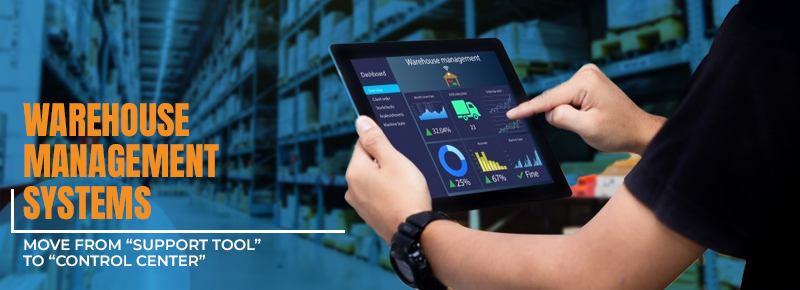
Warehouse Management Systems Move from “Support Tool” to “Control Center”
In 2026, WMS platforms are no longer viewed as backend software used only for inventory tracking. They are becoming operational control centers.
Warehouse owners and operators are increasingly demanding systems that provide:
- Clear operational visibility (what’s happening right now)
- Actionable data (what needs attention today)
- Performance insights (where time and money are being lost)
Key expectations from a modern WMS in 2026 include:
- Real-time dashboards for inbound, outbound, and inventory status
- Exception-based management (alerts instead of reports)
- Accurate order cycle time and fulfillment performance metrics
- Inventory aging, stock movement, and space utilization insights
The goal is not more data, it’s better decision-making on the warehouse floor.
Multi-Client and Multi-Warehouse Operations Become the Norm for 3PLs
For 3PL and fulfillment companies, growth in 2026 is less about adding one large client and more about managing multiple clients efficiently within the same infrastructure.
This trend is driving strong demand for WMS platforms that support:
- True multi-client architecture
- Client-level visibility without data overlap
- Configurable workflows per customer
- Client-specific billing, rules, and reporting
From an operational standpoint, this allows 3PLs to:
- Onboard new clients faster
- Standardize processes while keeping flexibility
- Scale without adding proportional operational overhead
By 2026, 3PLs that lack strong multi-client WMS capabilities will find it difficult to grow profitably.
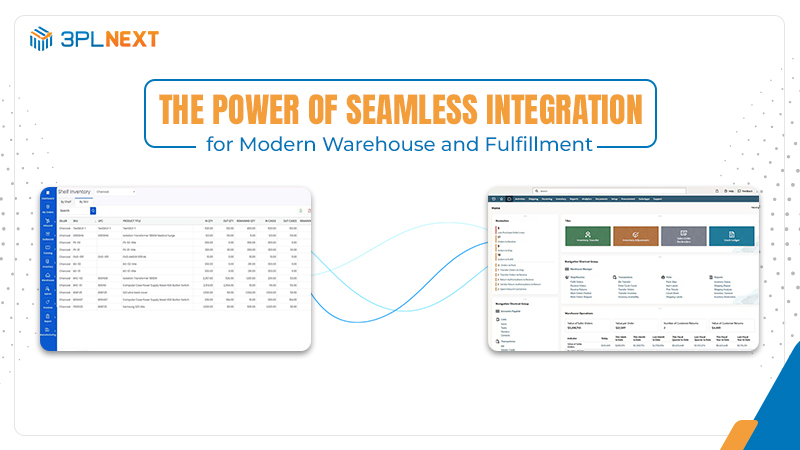
Integration and System Connectivity Take Priority Over Customization
One of the clearest industry shifts heading into 2026 is the move away from heavy system customization and toward clean, reliable integrations.
Warehouses now operate within an ecosystem that includes:
- ERP systems
- E-commerce platforms
- Transportation systems
- Accounting and billing tools
Instead of custom code, warehouse operators are looking for WMS solutions that offer:
- Standard APIs
- Faster onboarding with client systems
- Easier upgrades without breaking integrations
For warehouse managers, this means fewer disruptions.
For owners, it means lower long-term system maintenance costs.
Accuracy, Traceability, and Compliance Become Business-Critical
As order volumes grow and clients demand higher service levels, errors become more expensive, financially and reputationally.
In 2026, warehouses are placing stronger emphasis on:
- Inventory accuracy
- Order traceability
- Audit readiness
A modern WMS is expected to:
- Track every inventory movement
- Maintain clear audit logs
- Support lot, batch, and serial tracking where required
- Reduce dependency on manual checks and spreadsheets
For 3PLs, this also strengthens client trust and retention, as customers increasingly expect transparency into warehouse operations.
Billing, Reporting, and Commercial Visibility Gain Importance
Warehouse and fulfillment companies are becoming more aware that operational efficiency alone is not enough. Revenue leakage due to incorrect billing or untracked services is a growing concern.
By 2026, WMS platforms are expected to play a direct role in:
- Capturing billable warehouse activities
- Generating accurate client invoices
- Providing service-level reporting
- Supporting contract-based pricing models
This is especially important for 3PLs managing storage, handling, value-added services, and variable order volumes.

What This Means for Warehouse Leaders Going into 2026
The warehouse management industry outlook for 2026 is not about radical disruption, it’s about operational maturity.
Warehouse managers, owners, and 3PL leaders should be asking:
- Can our WMS scale with our business?
- Do we have real-time visibility into operations?
- Are our processes standardized yet flexible?
- Can we onboard new clients or channels without chaos?
Those who invest in practical, well-implemented warehouse management systems will be better positioned to handle growth, complexity, and customer expectations, without increasing operational stress.
Final Thought
In 2026, successful warehouses won’t be defined by how advanced their technology sounds, but by how well their systems support everyday operations.
A strong WMS will quietly do the heavy lifting, enabling accuracy, visibility, scalability, and control, while warehouse teams focus on execution.



Leave a Reply