The Impact of E-Commerce Growth on Fulfillment Operations
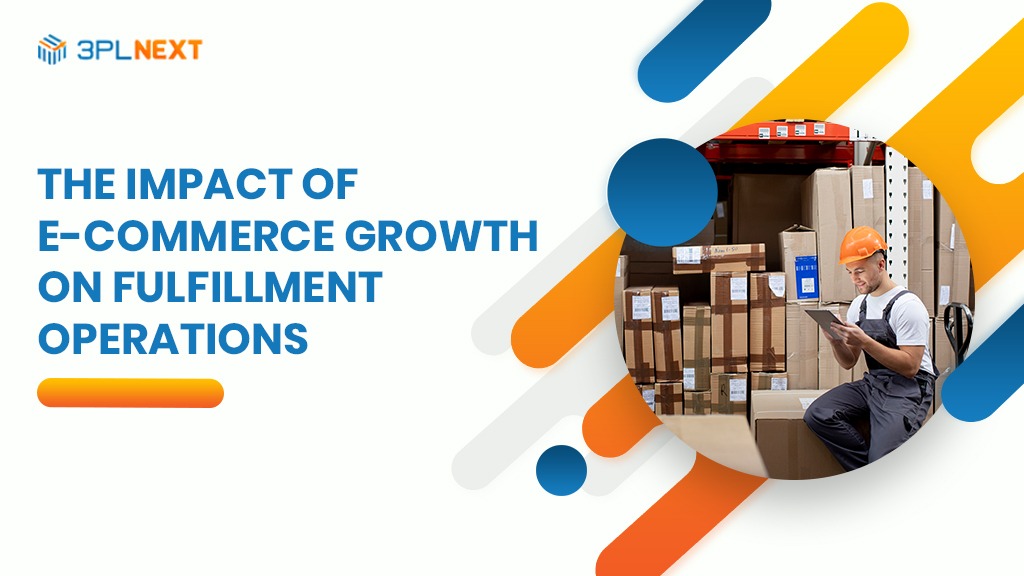
The rapid growth of the e-commerce industry has changed the way many businesses conduct their operations and interact with their customers. With the continued rise in demand for online shopping, fulfillment operations have had to adjust to meet new market requirements. This has affected their growth, making it a more challenging area of the supply chain industry and, therefore, more fulfilling when done right.
Fulfillment operations cover the core supply chain processes like receiving, processing, and delivering of goods to consumers. Online retail logistics involves managing storage, packing, and delivery of items, with the flexibility of warehouse-to-customer delivery, utilizing advanced technologies to ensure speed.

Technological Advancements
To cope with expansion and growth, fulfillment center efficiency is enhanced using technologies such as robotic arms, AR, and blockchain technology.
E-commerce logistics trends include the rise of automation and robotics, AI-driven demand forecasting, micro-fulfillment centers, and sustainable practices.
- AI (Artificial Intelligence) and Machine Learning: AI is a game-changer in various aspects of fulfillment operations. AI-driven chatbots, with their ability to provide real-time updates and support, promise a much more satisfying consumer experience.
- Robotics: Robots such as Automated Guided Vehicles (AGVs) and Autonomous Mobile Robots (AMRs) navigate and transport goods in warehouses, improving operational efficiency and minimizing the need for human labor.
- Conveyer Systems: They automate the movement of items within the warehouse, which enables faster storage and packaging. Conveyor systems are also more effective for handling bulky goods.
- Blockchain Technology: This provides a safe and reliable way to track goods, which helps reduce the risk of pilfering, misplacement, and theft. This technology is most useful for tracking high-ticket goods as well as for small but valuable and slow-moving items.
- Augmented Reality (AR): AR stimulates real-life scenarios to train warehouse employees. AR devices guide workers to the correct item locations, speeding up the picking process.
Operational Challenges
Due to the standards set by large online companies like Amazon, online consumers today expect fast deliveries, typically within one or two days. Hence, fulfillment centers have adopted technologies such as conveyor systems, robots, and AI to speed up processing and reduce manual errors.

Proper supply management, faster delivery expectations, high consumer expectations, and the difficulties associated with automation are the major order fulfillment challenges.
- Faster Delivery Expectations: during peak seasons like Black Friday and Christmas, companies usually need to hire additional staff to cope with the increased demand and ensure optimum speed. Fulfillment centers are often placed closer to urban areas to ensure faster delivery times.
- Supply Management: Managing timely supply across several different locations can prove challenging. Overstocking and stockouts can both be costly, and strict inventory monitoring and management are necessary to prevent both surpluses and shortages.
- Consumer Expectations: Meeting customer demands for fast, reliable, and accurate deliveries is always a challenge. Any delays or errors can lead to negative reviews and a bad reputation.
- Difficulties due to Automation: Automation in warehousing to meet rising demands has several operational challenges. Frequent maintenance and hardware repairs are necessary for optimum function. Any disruption in warehouse operations during maintenance will definitely raise issues.
- Warehouse Management: Proper warehouse management requires effective control of warehouse operations, including supply management and order fulfillment.
Impact on Labor
Many non-skilled warehouse workers have lost their jobs due to the automation of warehousing and fulfillment centers. However, with the substantial growth of e-commerce, the demand for such employees to handle the inflow of orders has skyrocketed. Positions in picking, packaging and delivery have opened up.
- Seasonal employment opportunities: During major events or holiday seasons, companies often hire additional staff temporarily to cope with increased volumes. This provides short-term employment for many workers.
- Working Speed: Due to the expectation of fast order processing, employees are required to meet tough targets, which can be highly stressful and exhausting
- Technical Skills: Workers are required to be proficient in using technologies such as Warehouse Management Systems (WMS), robotics, and automated sorting systems.
- Technological Integration: successfully integrating technology into traditional operations is a significant challenge in e-commerce fulfillment. Incorporating new technologies with existing ones can be a complex task that raises compatibility issues and the need for regular maintenance.
Shifts in Fulfillment Operations

The most significant change e-commerce growth impact has had on traditional fulfillment operations is the decentralization of fulfillment centers from a few big ones to several small sites located near major urban areas, which has facilitated faster deliveries.
- Wide Product Range: E-commerce platforms boast a wide array of items, and fulfillment centers need to be capable of handling a diverse product range.
- Omnichannel Fulfillment: Companies are now using physical stores as small fulfillment centers, enabling services such as buy online and pick up in-store (BOPIS). This enables faster deliveries and provides flexibility in supply management.
- Sustainability: Sustainability has become a vital part of fulfillment operations. Companies have adopted environmentally friendly practices, such as using recyclable materials and considering alternate delivery methods like drones.
The rapid growth of e-commerce has substantially impacted fulfillment operations. As a result, companies have had to adopt technologies such as AI, robotics, Augmented Reality (AR), and automation to achieve optimum order processing, packaging, and delivery speed and remain relevant in a highly competitive market.


Leave a Reply