
Stepping into the Shoes of a Warehouse Manager
When most people think about warehouses, they imagine shelves stacked high with boxes, pallets, forklifts buzzing around, and labor picking items for delivery. But behind the operational heartbeat of any warehouse lies someone who plans it all — the warehouse manager. From navigating tight deadlines and managing inventory accuracy to meeting customer expectations, this role is anything but ordinary.
Today, I want to share a perspective not from an outsider looking in, but from inside the warehouse itself — through the eyes of a warehouse manager, empowered by a smart Warehouse Management System (WMS). This is not just a story — it’s a reality for thousands of professionals ensuring supply chains never skip a beat.
Starting the Day: Planning and Visibility First
Every day begins with a dashboard check. Before the first pick ticket is printed, I log into our WMS to get a bird’s-eye view of the warehouse.
- How many orders are pending?
- What’s arriving today?
- Are we hitting our fulfillment KPIs?
- Are there any flagged delays or stockouts?
This kind of real-time visibility used to be a dream. Earlier, I would shuffle through Excel sheets and cross-check whiteboards to plan our day. Now, the system does the takes care and prioritize everything for me. Orders are auto-categorized based on delivery dates, shipping zones, and SKU types — allowing me to allocate resources accordingly.
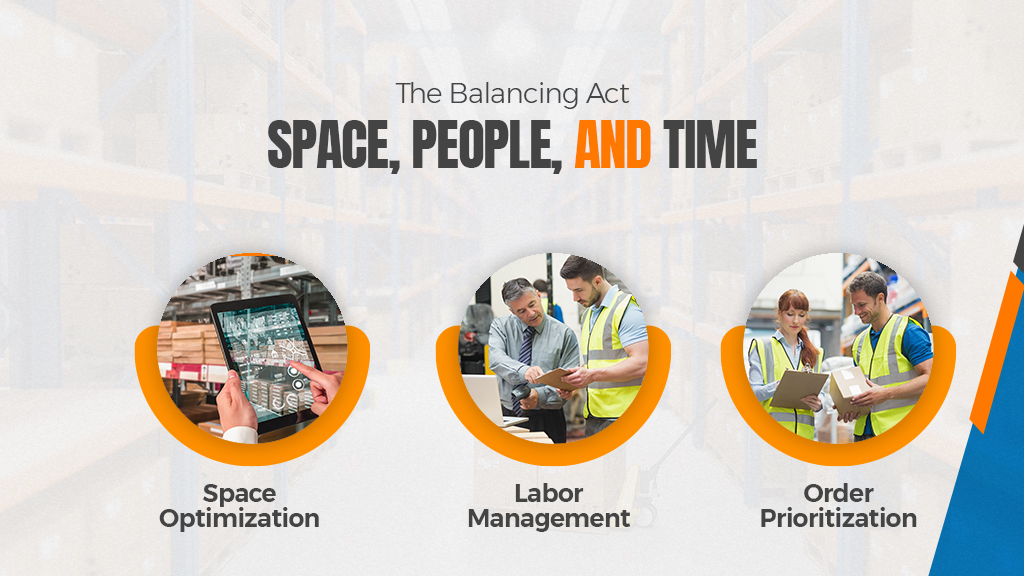
The Balancing Act: Space, People, and Time
Managing a warehouse is a constant juggling act. Space is always tight, labor can be unpredictable, and customer expectations keep rising. Let me break it down:
1. Space Optimization
Our WMS helps with smart slotting — suggesting the most efficient location for each SKU based on velocity and size. Fast-moving items are slotted close to the packing area; bulky items are stored in lower bays. Without this logic, I’d be relying on tribal knowledge — and mistakes would cost time and money.
2. Labor Management
Every picker, packer, and forklift operator have a different strength. The system allows me to:
- Assign tasks based on skillsets
- Monitor picker productivity
- Rotate zones to avoid fatigue
Thanks to task interleaving and dynamic workload balancing, I can ensure each team member is working efficiently without burnout.
3. Order Prioritization
Imagine handling 1,000 orders a day — some overnight, some standard, others flagged urgent by customer service. Manual sorting? Not feasible. The WMS dynamically reorders picking tasks as per SLAs and shipping deadlines, ensuring zero compromise on fulfillment timelines.
The Midday Crunch: Accuracy is Non-Negotiable
No matter how well you plan, the midday rush always comes — more orders in, trucks arriving, returns piling up. In this storm, the WMS becomes my anchor.
Inventory Accuracy
One of the biggest pain points before adopting the system was inventory inaccuracy. Now, with every item scan, putaway, or pick, the inventory updates in real time.
No more over-commitments. No more embarrassing “out-of-stock after order” situations.
Picking & Packing Automation
The system supports wave picking, batch picking, and zone picking — automatically choosing the best method based on order profile. Packing stations are equipped with scan-to-verify steps to ensure error-free shipments.
Returns, Damages & Exceptions: A New Level of Control
Returns used to be chaos. Unlabeled boxes, lost RMAs, and hours wasted in reconciliation. Now:
- RMAs are generated directly from the WMS
- Returns are pre-authorized with reasons and condition codes
- Stock gets updated the moment returned items are scanned
I also get automated alerts for exceptions — say, if an item is short-picked or a barcode doesn’t match. These are escalated instantly, enabling proactive handling rather than discovering them after customer complaints.
Data Is My Superpower
The biggest transformation since adopting our WMS? Data-driven decision making.
From SKU-wise velocity reports and heatmaps of picker movement to demand forecasting and SLA tracking — the system provides actionable insights that I never had before. It’s not just about running operations anymore; it’s about constantly optimizing them.
Just last month, based on heatmap analysis, we re-slotted our top 100 SKUs — reducing average picker travel time by 18%.
Closing Thoughts: It’s Not Just a Tool, It’s a Partner
A modern WMS is more than software. It’s a second brain. It understands my priorities, adapts to my workflows, and helps me sleep better at night knowing that the chaos is under control.
“Stepping into the shoes of a warehouse manager” means stepping into a role that’s equal parts strategist, firefighter, analyst, and leader. But with the right system, I don’t just manage the warehouse — I lead it with precision.



Leave a Reply