
Top 10 Warehouse Challenges and their Solutions
Warehousing is central to almost all supply chain management and logistics activities. Its core influence extends to all areas of activity, from stock management to consumer satisfaction. This means that many challenges arise during routine activities that impact warehouse and 3PL operations.
Third-party logistics providers like 3PLNext have applied advanced fulfillment systems and software to address some common issues in warehouse operations. Today, we examine the top 10 warehouse challenges and the solutions that 3PLNext offers its clients.
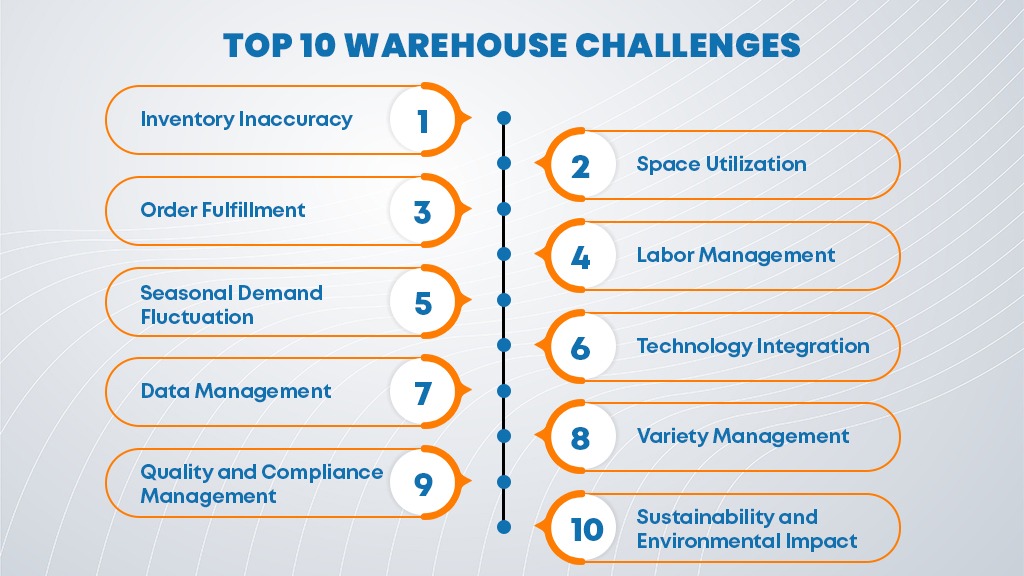
Maintaining accuracy in all inward and outward supply records is a given, but this can be difficult due to the frequency of product movements, returns, miscalculations, and sheer volume of goods. All of these can lead to issues such as shortages, surpluses, and stockouts for businesses.
Differences between actual and recorded stock levels can be the result of various factors such as miscounting or other types of human errors, supplier mistakes, system failures or integration issues, and maybe even theft.
3PLNext effectively addresses these problems by offering inventory tracking modules that offer real-time tracking. The software provides automated stock updates, and can raise alerts when set levels are crossed, ensuring that goods are always maintained at optimal levels. Barcodes and RFID tags are also used to minimize the chances of human errors and to ensure efficient tracking.
Utilizing all available warehouse space efficiently is a basic requirement for the effective running of 3PL operations. This allows businesses to earn optimal income while avoiding delays due to space mismanagement.
A warehouse should ideally be organized to allow the maximum number of items to be stored in the least space without compromising accessibility. This means that warehouses should be organized enough to optimize space at times of fluctuating order volumes, as space management is more challenging than usual.
3PLNext’s warehouse management system (WMS) boasts highly effective space optimization tools. These tools provide recommendations that help to maximize available space. The system also tracks inventory locations, making it easier to adjust inventory placement if stock levels fluctuate.
Order fulfillment is all about receiving, processing, packaging, and delivering consumer orders. This is a long, comprehensive process. Orders are processed, and items in warehouses need to be picked, packed, and then delivered ASAP. Any delays in order processing result in longer delivery times, which negatively impact a company’s reputation and customer satisfaction. This may result in complaints and negative reviews, leading to loss of business and less profitability.
3PLNext’s fulfillment management system has almost doubled the speed of our clients’ order processing through automation. Automating traditional shipping processes allows for effective shipment tracking and quick label printing, which enhances efficiency and turnaround times.
4- Labor Management in Warehousing
Labor management is critical in warehousing. This is a warehouse challenge since it involves a significant cost head for all 3PL businesses. Labor productivity is a key part of warehouse management. In addition, effective workforce scheduling and training programs are needed to ensure that all employees are well-qualified and trained to perform their respective jobs. Businesses also need to offer good incentives to enhance employee satisfaction.
3PLNext’s warehouse management system uses workforce management features to measure labor productivity. This helps to reduce traditionally high labor costs and prevents labor inefficiencies from eating away at profits.
Our software can also analyze the optimal labor requirements for each warehouse space, preventing surplus labor costs and allied overheads. The system also reduces reliance on labor by automating routine tasks.
5- Seasonal Demand Fluctuation
Many warehouses experience steep fluctuations in demand during different seasons. Handling the storage and packaging of changing product levels while maintaining optimum operation speed and efficiency can prove challenging. Businesses particularly encounter this problem during peak seasons such as Christmas, Black Fridays, and Thanksgiving.
3PLNext’s fulfillment management system boasts advanced demand forecasting tools and flexible supply management features to handle changing demand effectively. In other words, the system predicts when demand spikes will occur, enabling warehouses to prepare in advance.
Moreover, 3PLNext’s inventory management system helps to adjust supply levels based on predicted demand. The software’s workforce management capabilities enable labor adjustments during such times.
3PL Next’s inventory, space, and workforce management modules help businesses gear up their preparations before peak seasons approach and plan business slowdowns as demand settles into regular business flows. Businesses can plan their space utilization to ensure ease of access and smooth flow. For instance, before Christmas, Christmas décor items can be tagged and rearranged (if needed) to a more accessible location to ensure prompt delivery and returns can also be managed efficiently.
6- Technology Integration
Warehouses usually face difficulties integrating such diverse and complex technologies like WMS and e-commerce systems. Hence, system incompatibility leads to communication gaps, which cause errors and delays. Manual data entry and a lack of synchronization between different systems causes disparities, while data silos hinder visibility. All these issues cause inefficiencies in warehouse operations, making it considerably difficult to cater to market demand.
3PLNext’s fulfillment management software provides strong integration capabilities, enabling smooth communication and data exchange between different systems. Middleware solutions enable compatibility between systems, which helps in efficient data exchange.
3PLNext’s cloud-based wms is ideal for companies that require flexibility, as it offers scalability and accessibility. In addition, 3PLNext ensures data security by implementing strict security protocols.
7- Data Management
Effective data management is necessary for warehouse operations but extremely difficult due to the vast volumes of data generated. Issues include errors in data entry, unsynchronized data across different systems, and complexities in tracking. This leads to inaccurate stock records and poor decision-making, which impacts operational efficiency and, ultimately, consumer satisfaction.
3PLNext’s fulfillment management system offers excellent data management services, such as advanced analytics and centralized databases. This system provides accurate and updated information about operations, and security measures such as encryption are also implemented.
8- Variety Management
Having a diverse product range can make warehouse operations a bit complicated. It is difficult to store, process, retrieve, and deliver a wide variety of items, and different types of products have different storage and packaging requirements. For example, a food or fruit vendor will need to have a fast delivery service as fruits are perishable goods as well as a refrigerated delivery van.
Another example is breakable and delicate items. These need to be packaged with the topmost care and have specific packing requirements, such as using special packing like bubble wrap. This is necessary because if the item arrives damaged to the customer, it could lead to negative reviews. Moreover, most businesses prioritize large-volume orders, typically made by large companies, as these are both profitable and good for business.
3PLNext offers complex inventory management tools to classify, track, and utilize available storage space for different types of products. Automated retrieval processes enable faster delivery. 3PLNext effectively manages product variety and improves overall warehouse performance.
9- Quality and Compliance Management
Implementing standardization and quality control measures is vital to upholding industry standards. It also helps avoid penalties and maintain consumer confidence. This is both complex and time-consuming as it involves adhering to strict industry standards, conducting frequent inspections, and keeping accurate and updated records. In addition, a variety of management requirements also need to be met. For instance, food items and medicines storage need to meet quality control specifications. Insufficient supervision and inactive management can lead to noncompliance penalties, product returns, and loss of consumer trust and business.
3PLNext incorporates compliance and quality control measures in its fulfillment management system. The platform provides tools for monitoring product quality, conducting tests and inspections, and adhering to industrial and standard regulations. This comprehensive method ensures premium quality and high consumer satisfaction.
10- Sustainability and Environmental Impact
Reducing the environmental impact of warehouse operations and addressing the issue of sustainability is vital to counter pollution. Achieving this would require waste reduction, low energy consumption, and reduced carbon emissions. However, implementing eco-friendly practices involves high costs. Managing this can be difficult due to outdated infrastructure and inefficient processes.
Adopting sustainable warehousing practices is a necessity for businesses aiming to reduce their environmental impact and operational costs. By focusing on efficient and renewable energy, space utilization, waste reduction, and sustainability in all core operational aspects like packaging and transportation, companies can achieve significant benefits.
More details are available on Sustainable Warehousing Practices: Reducing Environmental Impact and Cost
3PLNext encourages to implements eco-friendly solutions such as energy-efficient warehouse designs and non-plastic packaging. Its fulfillment management system promotes initiatives like recycling and waste reduction.
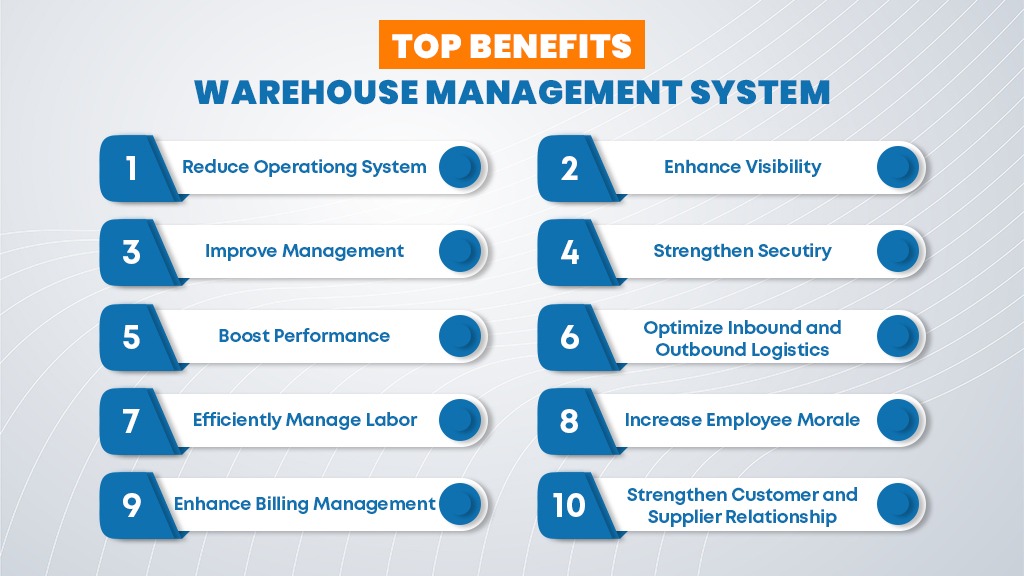
3PLNext’s fulfillment management systems and software promptly address and solve these 10 challenges by utilizing advanced technology and automation. These innovative solutions improve speed, reliability, product quality, and consumer satisfaction. By adopting 3PLNext’s comprehensive solutions, businesses can stay competitive in this industry.


Leave a Reply