Adopting Blockchain Technology in Supply Chain: Ensuring Transparency and Traceability
In an increasingly complex global market, supply chain management faces numerous challenges. To handle these, transparency and traceability have become paramount for companies aiming to build consumers trust, improve operational efficiency and comply with regulatory requirements. One transformative solution gaining momentum is blockchain technology. Understanding and integrating blockchain technology in a warehouse management system, can offer substantial benefits for your supply chain operations.

Understanding Blockchain Technology
Blockchain is a decentralized digital ledger that records transactions across multiple computers in a way that the registered transactions cannot be altered retroactively. This inherent immutability and transparency makes blockchain an ideal solution for supply chain management. Each participant in the supply chain network can record transactions securely, ensuring that every stage of the product lifecycle is documented and verifiable.
With the use of special codes and digital signatures, blockchain builds a safe, trackable, and open system across the supply chain. Let’s explore the advantages of blockchain traceability in better managing the supply chain.
Building Trust Among Shareholders
Blockchain’s decentralized system is known for its robust security, transparency, and immutability. From finding raw materials to the final product, blockchain transparency enables a clear view of the supply chain.
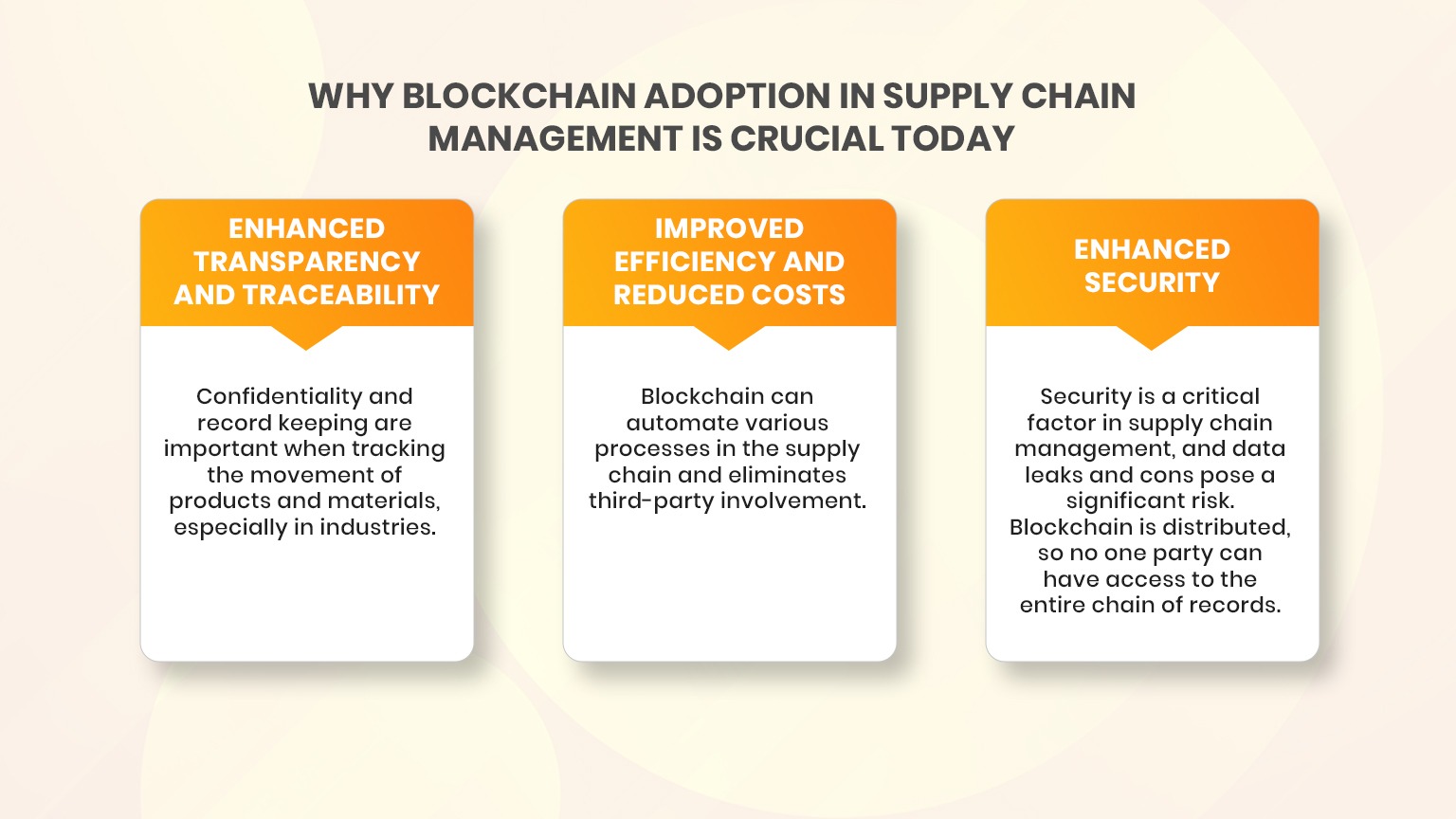
This traceability provides supply chain managers with useful insights into the entire process. It is especially helpful for identifying bottlenecks or potential areas for process improvement.
It is also important in helping businesses follow ethical standards and comply with relevant regulations, ensuring that all parties remain accountable. Accountability fosters trust among multi-stakeholder environments and clientele as they get the full view of the origins and production process of purchased goods.
In the future, as sustainability concerns and parameters tighten, this will become even more critical.
Enhancing Operational Efficiency
Finding real-time execution errors in the supply chain can be quite challenging when done manually. This usually causes errors in inventory data, missing or delayed shipments, and duplicate payments become more common. It also makes tracking down the root causes of these issues through ledger entries and documents tricky.
Traditional systems are more prone to fraud and errors, which impact operational efficiency and potentially damage the brand’s reputation and consumer trust.
By using blockchain technology to automate supply chain processes, delays and costs can be minimized. This leads to generally superior operational efficiency.
Predicting Supply Chain Risk
Blockchain-based supply chain management offers end-to-end monitoring. This is an excellent feature because it helps collect data and recognize patterns. With this, supply chain managers can get insights into important demographics and forecast future trends.
Blockchain technology provides easy access to reliable historical data that cannot be altered, which enables a thorough examination of previous patterns. This useful historical information plays a vital role in creating predictive models that anticipate future trends in supply chain operations.
Smart Contracts
Imagine blockchain-powered smart contracts as trusty workflow assistants in charge of automating and smoothing out supply chain operations, including traditionally complicated functions like compliance, payments, and procurement.
Thanks to the decentralized and transparent blockchain technology they rely on, these smart contracts cut out the intermediaries, reducing administrative expenses. They also lower the chances of mistakes and disagreements.
A real-world example of a smart contract is that when a shipment arrives at its location, the smart contract triggers the payment automatically. The smart contract enhances overall accountability and efficiency and ensures the fulfillment of contractual obligations.
Conclusion
Blockchain plays a key role in boosting transparency and trust among everyone involved while making operations run smoother. This exciting tech stands out as a top contender in revolutionizing supply chain management. It helps to address various challenges, tackling issues like data tampering across information, finances, and inventory transactions. It also speeds up deliveries, cuts costs, and offers improved tracking capabilities.


Leave a Reply