2025 Supply Chain Challenges & Its Solution
Quick Summary: While the pandemic created unprecedented supply chain disruptions, the logistics industry continues to face new challenges in 2025. From geopolitical tensions to climate change, businesses must adapt to stay competitive in an ever-evolving landscape.
Introduction:
The COVID-19 pandemic, rapid inflation, geopolitical conflicts, and extreme weather events have reshaped the global supply chain in ways no one could have predicted. These challenges tested the resilience of ecommerce retailers and third-party logistics (3PL) providers alike, forcing them to rethink their strategies and adapt to a new normal.
Even as the world moves past the pandemic, 2025 brings its own set of hurdles. Companies must navigate emerging risks to remain competitive in the fast-paced warehousing, logistics and ecommerce sectors. For instance, industry leaders are already discussing how to prepare for potential policy changes, such as new tariffs, that could impact global trade.

The Evolution of the Modern Supply Chain
To understand the challenges of 2025, let’s take a step back and examine how the supply chain has evolved since the pandemic.
2021-2022: A Period of Recovery and Resilience
By 2021, global supply chains began to stabilize after the chaos of 2020. However, the road to recovery was far from smooth. Port congestion, labor shortages, manufacturing delays, and extreme weather events like hurricanes and wildfires continued to disrupt operations.
Additional challenges, such as new COVID variants, factory shutdowns, and the infamous Ever Given incident, added further complexity. Despite these obstacles, many ecommerce brands and 3PLs found innovative ways to stay afloat.
For example, some businesses shifted to selling products on backorder, while others turned to domestic suppliers to reduce reliance on international partners. These strategies didn’t eliminate supply chain issues but provided greater flexibility and risk mitigation. Companies that thrived during this period focused on streamlining operations, optimizing working capital, and improving overall efficiency.
2023-2024: New Challenges Emerge
While global supply chains saw fewer disruptions on a macro level by 2023, new challenges arose. Geopolitical tensions in regions like Ukraine and the Middle East forced ships to reroute around the Horn of Africa, bypassing the Suez Canal. This significantly increased freight times and costs.
Climate change also played a major role, with record-breaking temperatures in Southeast Asia and intense hurricane seasons causing further delays. Although these events often occurred far from the U.S., their ripple effects were felt across globally distributed supply chains.
To combat these issues, companies adopted strategies like forming stronger partnerships with logistics providers, sourcing materials from nearshore and domestic suppliers, and leveraging on-demand arrangements to improve margins and reduce reliance on expensive air freight.
Additionally, rising inflation drove businesses to focus on internal optimization. Brands and 3PLs alike sought ways to cut costs, enhance efficiency, and deliver greater value to their customers.
Supply Chain Challenges in 2025
As 2025 unfolds, supply chain professionals are bracing for a host of new and unpredictable challenges that could disrupt transit times, productivity, and profitability across industries. Below, we explore the most pressing issues expected to shape the supply chain landscape this year and how businesses can prepare to tackle them head-on.
1. Global Economic Uncertainty
The global economy remains volatile in 2025, with fluctuating oil prices, unpredictable inflation rates, and evolving trade policies creating a complex environment for supply chains. These factors can destabilize cost structures and operational efficiency, making it harder for businesses to plan effectively.
To navigate this uncertainty, companies are turning to advanced tools like financial forecasting software and predictive analytics. These technologies enable better risk management and decision-making. Additionally, proactive financial planning and fostering strategic global partnerships can help businesses adapt to economic shifts while maintaining supply chain resilience.
2. Shifting Geopolitical Relations
Geopolitical tensions and policy changes, such as the proposed tariffs under Donald Trump’s administration, are set to impact global trade dynamics. Companies must stay informed about international developments and remain agile to adjust their strategies as needed.
Building flexible supply chain models and maintaining strong relationships with global partners are essential to mitigating risks. By staying neutral and focused on strategic adjustments, businesses can ensure continuity and minimize disruptions caused by geopolitical shifts.
3. Regulatory Compliance
Navigating the ever-changing landscape of regulations across different markets is a significant challenge for supply chain managers. Automated compliance management systems can simplify this process by tracking and organizing regulatory data efficiently.
Staying ahead of regulatory changes and integrating them into business operations is critical. Collaborating with legal and compliance experts can provide valuable insights, ensuring that companies remain compliant while avoiding costly penalties.
4. Sustainability Urgency
Sustainability is no longer optional—it’s a necessity. Consumers, investors, and regulators are demanding greater transparency and environmentally responsible practices. Companies are now prioritizing ESG (Environmental, Social, and Governance) goals by adopting sustainable logistics strategies.
Initiatives like optimizing transportation routes to reduce fuel consumption, investing in renewable energy, and improving energy efficiency are becoming standard practices. These efforts not only help businesses meet regulatory requirements but also align with the growing expectations of stakeholders who value sustainability.
5. Changing Consumer Demands
Today’s consumers expect more than just fast delivery—they want transparency, customization, and eco-friendly practices. To meet these demands, supply chains are leveraging technologies like real-time tracking and advanced analytics.
These tools enable businesses to anticipate consumer behavior, manage inventory more effectively, and reduce waste. By adopting responsive logistics solutions, companies can stay ahead of consumer expectations and adapt to future trends.
6. Labor Shortages
The ongoing shortage of skilled workers, including truck drivers and warehouse staff, is forcing companies to rethink their workforce strategies. Automation and AI are playing a crucial role in filling gaps and boosting productivity.
However, technology alone isn’t the solution. Retaining a skilled workforce requires improving working conditions, offering competitive compensation, and investing in employee development. A balanced approach that combines technology with human expertise is key to building a resilient and efficient workforce.
7. Cybersecurity Threats
As supply chains become increasingly digitized, the risk of cyberattacks grows. A single breach can disrupt operations, compromise sensitive data, and damage a company’s reputation.
To combat these threats, businesses are investing in advanced cybersecurity measures, conducting regular audits, and training employees on best practices. Partnering with IT security experts ensures that supply chains remain protected against evolving cyber risks.
How to Overcome Supply Chain Challenges
The reality is clear: as society, technology, and the global economy continue to evolve, supply chain challenges will persist. The good news? There are countless strategies to mitigate these issues and strengthen your supply chain resilience, ensuring you can tackle any obstacle head-on.
While there’s no universal solution for supply chain planning, combining a variety of proven techniques can help ecommerce brands and 3PL providers boost their operational resilience. By adopting a multifaceted approach, businesses can stay competitive, adapt to changing demands, and thrive in an unpredictable market.
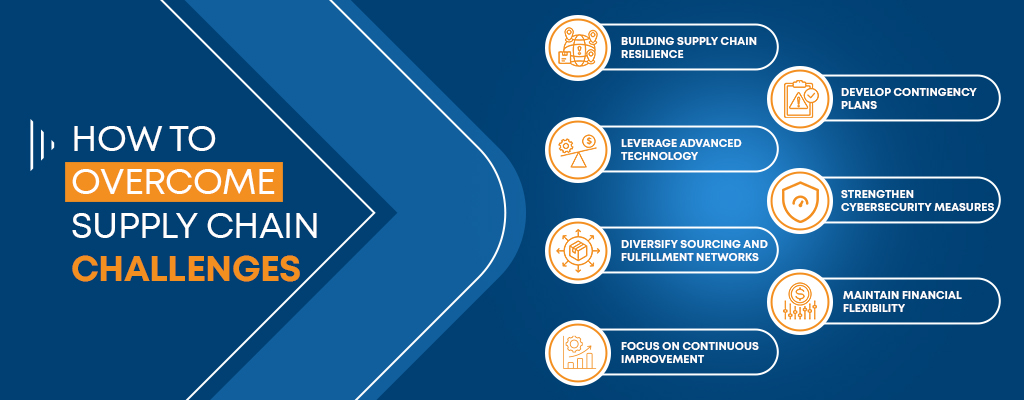
Building Supply Chain Resilience
In today’s unpredictable landscape, resilience is the key to thriving amid supply chain challenges. Companies that remain flexible and adaptable are better equipped to handle unexpected disruptions and make strategic pivots when necessary.
This resilience often involves finding innovative solutions to complex problems in areas like inventory management, technology integration, and marketing strategies. By adopting a contingency planning mindset, exploring flexible financing options (such as lines of credit), and staying agile in response to market changes, businesses can navigate fluctuations smoothly and maintain stability even in the face of adversity.
Develop Contingency Plans
Preparation is critical. Businesses should create contingency plans to address potential disruptions, such as identifying alternative shipping ports or diversifying fulfillment strategies. These plans ensure that operations can continue smoothly, even during unforeseen events or sudden spikes in demand.
For example, many ecommerce brands rely heavily on imports from Asia, with the ports of Los Angeles and Long Beach serving as major hubs for Transpacific trade. However, these ports often face congestion, and the surrounding warehousing market is highly competitive. To mitigate risks, companies can adopt geographically dispersed inventory strategies or establish backup fulfillment centers to avoid delays.
Leverage Advanced Technology
Embracing cutting-edge technologies like artificial intelligence (AI) and the Internet of Things (IoT) can transform supply chain operations. Predictive analytics, for instance, helps businesses optimize inventory levels, anticipate consumer demand, and allocate resources efficiently.
Tools like 3PLNext’s order routing automation, real-time inventory management, and integrated warehouse management systems provide a competitive edge. These technologies enable businesses to respond swiftly to market changes, reduce costs, and improve overall efficiency, ensuring a more agile and resilient supply chain.
Strengthen Cybersecurity Measures
As supply chains become increasingly digital, the risk of cyberattacks grows. Protecting your digital infrastructure is essential to maintaining smooth operations and safeguarding your reputation.
Implement robust cybersecurity protocols, conduct regular audits, and provide ongoing training for employees to stay vigilant against threats. By fortifying your defenses, you can prevent breaches, protect sensitive data, and ensure the continuity of your supply chain operations.
Diversify Sourcing and Fulfillment Networks
Relying on a single supplier or fulfillment center can be risky, especially in the face of geopolitical tensions or trade policy changes. Diversifying your network reduces vulnerabilities and ensures a steady flow of materials and products.
Consider building partnerships with both global and local suppliers, and explore fourth-party logistics (4PL) networks to enhance flexibility. A diversified approach minimizes the impact of disruptions, such as material shortages or shipping delays, and helps maintain consistent delivery to customers.
Maintain Financial Flexibility
Cash flow is a critical component of supply chain resilience. Having access to flexible financing options, such as lines of credit, can help businesses navigate seasonal fluctuations in demand and unexpected expenses.
For instance, during peak seasons, businesses can use these funds to stock up on high-demand items, prioritize manufacturing, or expedite shipping. This financial flexibility ensures that companies can meet service level agreements (SLAs) and customer expectations, even during challenging times.
Focus on Continuous Improvement
Resilience isn’t a one-time effort—it’s an ongoing process. Regularly evaluate your supply chain strategies, identify areas for improvement, and stay informed about industry trends and emerging risks.
By fostering a culture of continuous improvement, businesses can adapt to new challenges, optimize operations, and maintain a competitive edge in an ever-evolving market.
Strengthen Your Supply Chain Management with 3PLNext
In a world where supply chain challenges evolve every year, ecommerce brands and 3PLs continue to demonstrate remarkable resilience. By transforming their supply chain management strategies, they’ve been able to repair vulnerabilities and prepare for future disruptions.
The pandemic, now five years behind us, highlighted the urgent need for greater supply chain optimization and faster decision-making—a lesson that remains relevant today. The key to success? Technology.
As we move forward, supply chain leaders must adopt a holistic approach supported by cutting-edge tools to stay ahead of the curve. This is where 3PLNext shines.
But for us, software is just the beginning. 3PLNext’s mission goes beyond order fulfillment—we’re dedicated to helping ecommerce brands and 3PL warehouses collaborate more effectively and build lasting partnerships. Our goal is to create a resilient supply chain that empowers your business to thrive, no matter what challenges arise.
Ready to see how 3PLNext can transform your supply chain and fulfillment capabilities? Request a demo today and take the first step toward a stronger, more efficient future.


Leave a Reply